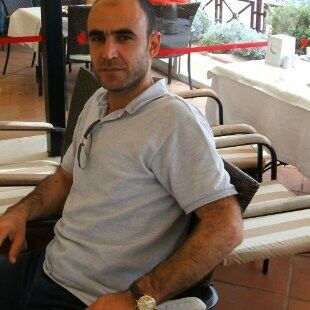

Between Emotion, Law and Public Debate
Press release of the Association of German Criminal Officers on the verdict in the case of the killing of the police officer Simon B. in Völklingen.
"The killing of Simon B. is shocking - the verdict is causing discussions. Between grief, incomprehension and legal reality, it becomes clear that criminal law is often more complex than it seems at first glance", said Association of German Criminal Officers in Press release.
Press release of the Association of German Criminal Officers on the verdict in the case of the killing of the police officer Simon B. in Völklingen.
Between Emotion, Law and Public Debate
The killing of our colleague Simon B. has caused concern nationwide. Many colleagues find the judgment of the Saarbrücken Regional Court to be difficult to understand. This is understandable, especially since a judgment in a case in which a police officer was killed in the exercise of his service can often only be legally classified if the written reasons for the judgment are available and a closer examination of the reasoning is possible.
At the same time, the public discussion shows again how quickly criminal decisions can get into pointed interpretations. The court has determined that the perpetrator shot the police officer. On the basis of a psychiatric expert opinion, however, it came to the conclusion that at the time of the crime there was an incapacity for guilt within the meaning of § 20 StGB. The decisive factor was a diagnosed serious mental illness, according to the previously known information a paranoid schizophrenia.
According to the findings of the court, the perpetrator was already significantly reduced in his culpability in the pre-fact, in particular in the case of robbery. For the subsequent killing, however, the court assumed that due to the illness-related impairment, there was complete incapacity for guilt. Accordingly, in this situation, the perpetrator was not in a position to see the wrong of the crime or to act according to this insight.
No penalty may be imposed in such cases. Instead, the court regularly orders accommodation in a psychiatric hospital in accordance with § 63 StGB. This accommodation is a measure of improvement and security. It is not for punishment, but for the protection of the general public from perpetrators, whose considerable dangerousness is based on a serious mental illness. Accommodation basically lasts as long as this dangerousness persists. It is therefore not limited in time from the outset and is regularly reviewed in court.
In the public debate, this differentiation is often presented in a nutshell. Terms such as “unpunished” or “murder without punishment” therefore fall short and can create a distorted picture of the actual legal consequences.
Comparisons with possible penalties also often lead to misunderstandings. For adolescents, the legal maximum of the juvenile sentence is basically ten years. If the act is murder and this maximum is not sufficient because of the particular seriousness of the guilt, the maximum measure can be up to 15 years.
The Federation of German Crime Officials considers an open and also critical discussion about judicial decisions to be legitimate. Criticism, however, should take into account the fundamental principles of criminal law. This includes in particular the separation between facts, criminal guilt and the measures of improvement and safeguarding.
On the other hand, the sometimes excessive reactions in the public debate are problematic. Threats against courts or personal attacks on judges exceed the limits of a discourse of the rule of law. Those who want to defend the rule of law should help to explain their functioning in an understandable way and not merely to reinforce emotions.
Our legal system provides for appeals for the review of judicial decisions. As far as is known, the public prosecutor's office has appealed. This procedure is used for the legal review of the judgment. The Federal Court of Justice examines exclusively whether there are legal errors; a new taking of evidence or own evaluation of the facts does not take place there.
The specific case also raises legal questions that can hardly be conclusively assessed without knowledge of the full reasons for the judgment and the taking of evidence. This applies in particular to the assessment of the culpability within the fact.

At the same time, the debate shows a structural problem: criminal decisions are often communicated in a technical language that is only limitedly understood outside the judiciary. Especially in cases like this, this can quickly lead to a tension between legal evaluation and social justice.
The BDK therefore advocates two things: a factual, rule-of-law-in-law criticism of judicial decisions and at the same time an understandable communication of criminal connections to the public. Especially in emotionally stressful cases, those who participate professionally in the public debate have a special responsibility.
Perhaps this is also a common task for all those who are professionally involved with criminal law, police and justice: not only to take a position, but to contribute to the fact that the rule of law remains explainable at such moments.
Despite all the legal classification, our sorrow for our colleague Simon B remains. Our thoughts are with his family and colleagues.
Press release on the ruling: bdk.de/der-bdk/was-wir-tun/aktuelles
Association of German Criminal Officers: bdk.de
Photo: ©BDK
“All rights belong to BDK - Bund Deutscher Kriminalbeamter” (for this news)