
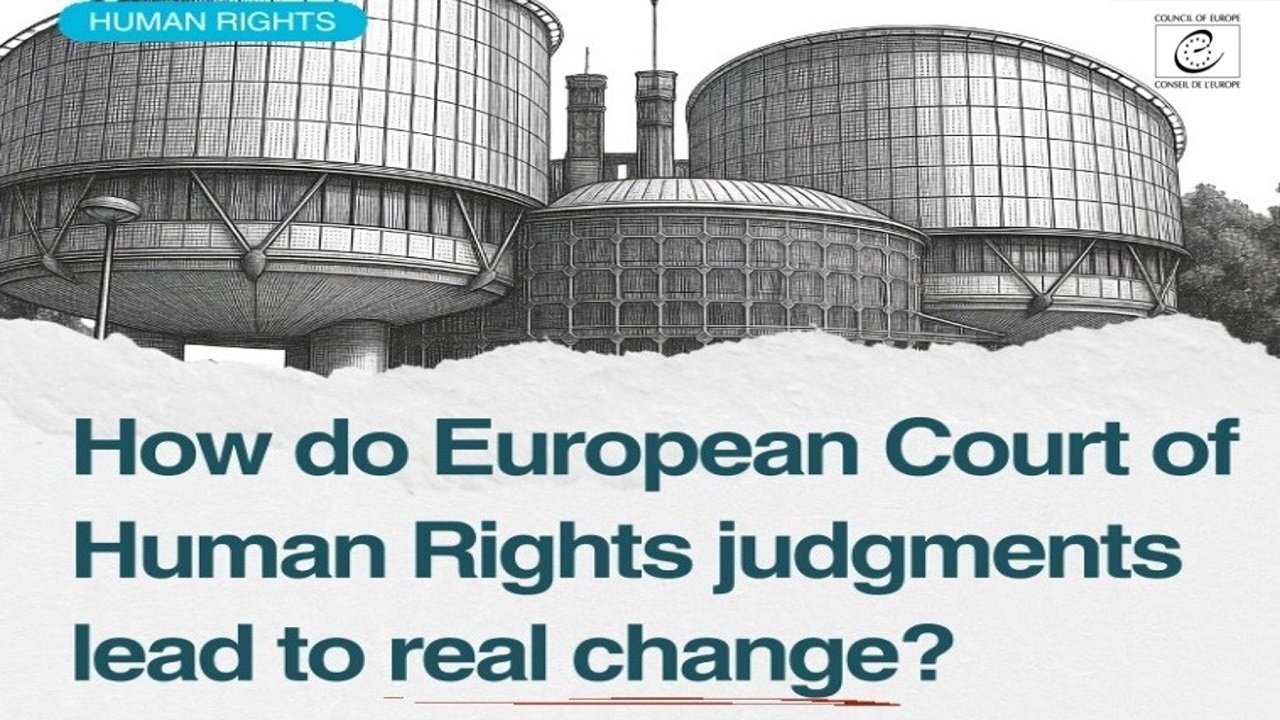
What happens after the delivers a judgment?
A judgment is not the end of the process. In many cases, it is only the beginning.
Once a judgment becomes final, responsibility shifts to its execution.
Media release from Human Rights and the Rule of Law at the Council of Europe:
What happens after the European Court of Human Rights delivers a judgment, and how does it lead to real change in practice?
A judgment is not the end of the process. In many cases, it is only the beginning.
Once a judgment becomes final, responsibility shifts to its execution.
This relies on a shared dynamic:
• Respondent States take the necessary measures to remedy the violation and prevent similar cases
• The Committee of Ministers supervises the execution of judgments
• The process is supported through dialogue, technical input, and continuous exchange with national authorities
In practice, execution involves:
• Individual measures to ensure redress for the applicant
• General measures to address the root causes of violations
• Ongoing co-operation to support implementation over time
Execution is ultimately the responsibility of each Member State. But at the same time, it is a process built on partnership, aimed at identifying practical and sustainable solutions.
The latest annual report highlights both progress and complexity. The 949 cases closed by the Committee of Ministers in 2025 reflect more than procedural steps. They represent concrete changes in law, policy and practice, with a direct impact on people’s lives.

At the same time, many cases, especially those involving structural challenges, require sustained efforts, coordination and long-term engagement. This is where implementation becomes critical: the real impact of a judgment depends on what changes in practice.
Explore the full report to better understand how judgments translate into change in practice:
coe.int/en/web/execution/annual-report-2025
Council of Europe: coe.int/en/web/portal/home
Photo: ©Council of Europe
All rights belong to: (for this news)
Human Rights and the Rule of Law at the Council of Europe | Council of Europe