Universität Augsburg
New diagnostic approach for prostate cancer!
Universität Augsburg:
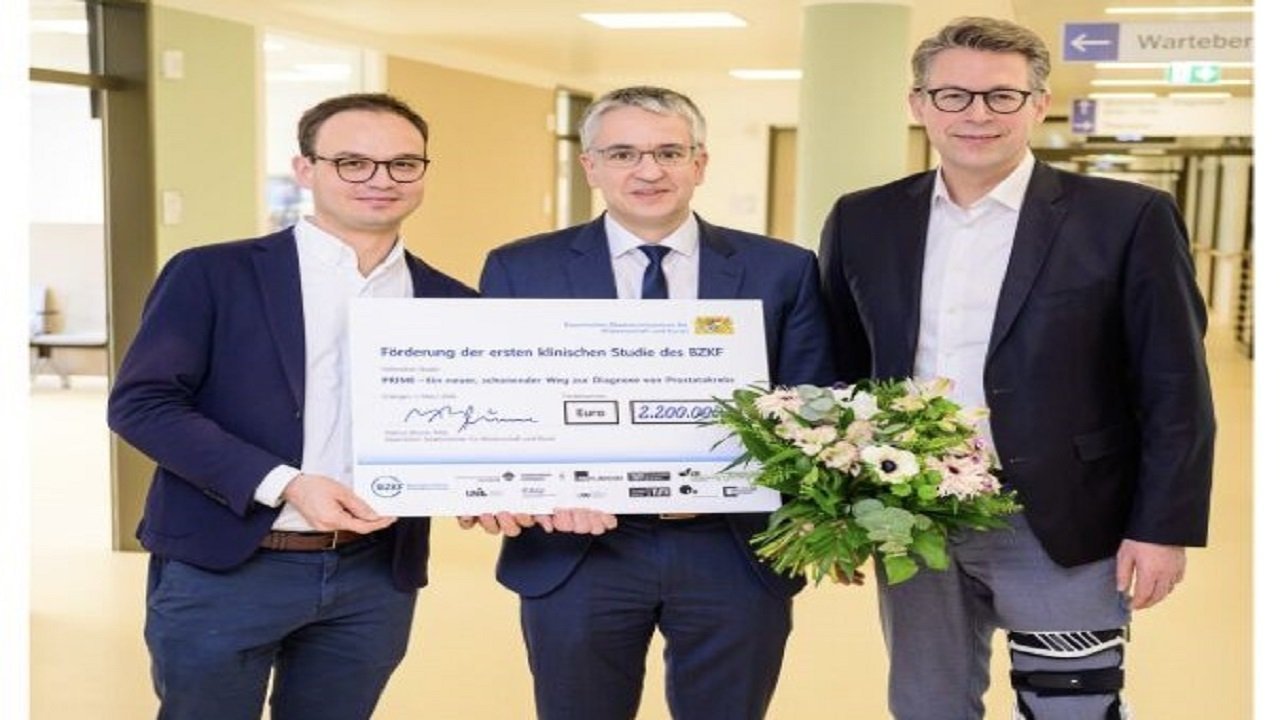
A clinical study by the University Hospital Augsburg, funded by the Bavarian Center for Cancer Research (BZKF) with 2.2 million euros, is investigating how prostate cancer can be detected more precisely and thus in a less invasive way for patients. The study is led by Dr. Matthias Heck, Professor of Urology, and Prof. Dr. Matthias Eiber, Head of the Theranostics Section of the University Hospital of the Technical University of Munich.
Prostate cancer is one of the most common cancers in men. Until now, an elevated PSA level in the blood and an abnormal MRI finding were usually followed by a tissue sample (biopsy). For many men, this examination represents a significant physical and psychological burden – it is unpleasant, painful, and carries a risk of infection. Furthermore, harmless findings that do not require treatment are not uncommon.

The PRIME study investigates whether additional modern imaging techniques (positron emission tomography (PET) / computed tomography (CT) can further improve diagnostics. PSMA-PET/CT enables even more precise visualization of prostate cancer cells using a very small amount of a radioactive tracer. As part of the study, 150 men with abnormal MRI findings will undergo this additional examination.
Depending on the findings, fewer or more targeted biopsies may be required for a reliable diagnosis of prostate cancer requiring treatment. The goal is to detect aggressive tumors early and reliably while avoiding unnecessary procedures.
PRIME is one of two internal studies of the Bavarian Center for Cancer Research (BZKF) that are being funded by the center itself for the first time. "These studies represent an important milestone for the BZKF," says Prof. Dr. Andreas Mackensen, Director of the BZKF. "Patients throughout Bavaria can participate without having to travel long distances."
At the check presentation, Bavaria's Science Minister Markus Blume emphasized: "Scientific excellence becomes concrete hope: For the first time, the BZKF is launching its own clinical studies – thus bridging the gap between research and concrete application. The focus is on leukemia and prostate cancer – two areas where medical progress is urgently needed. What begins here today is the visible result of a strong network.”
Universität Augsburg: uni-augsburg.de/en/
"All rights belong to Universität Augsburg"